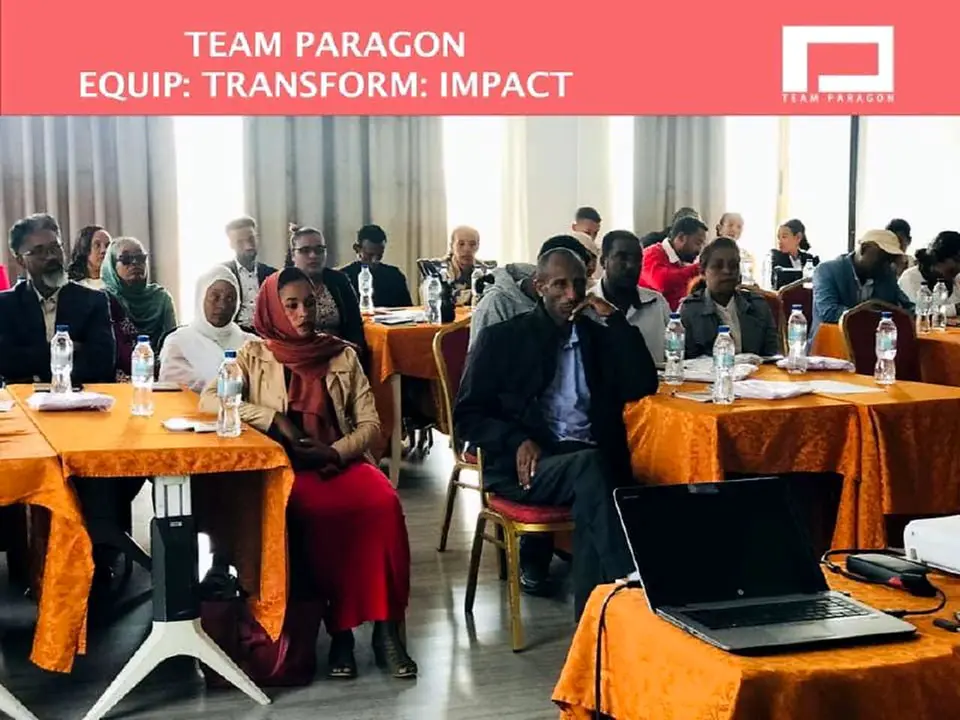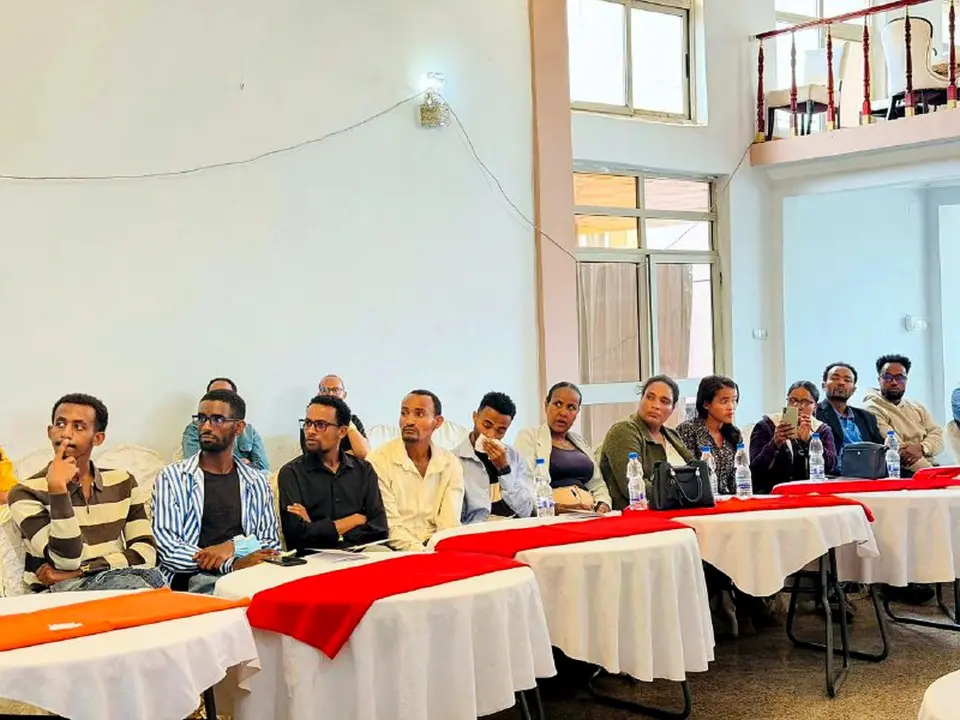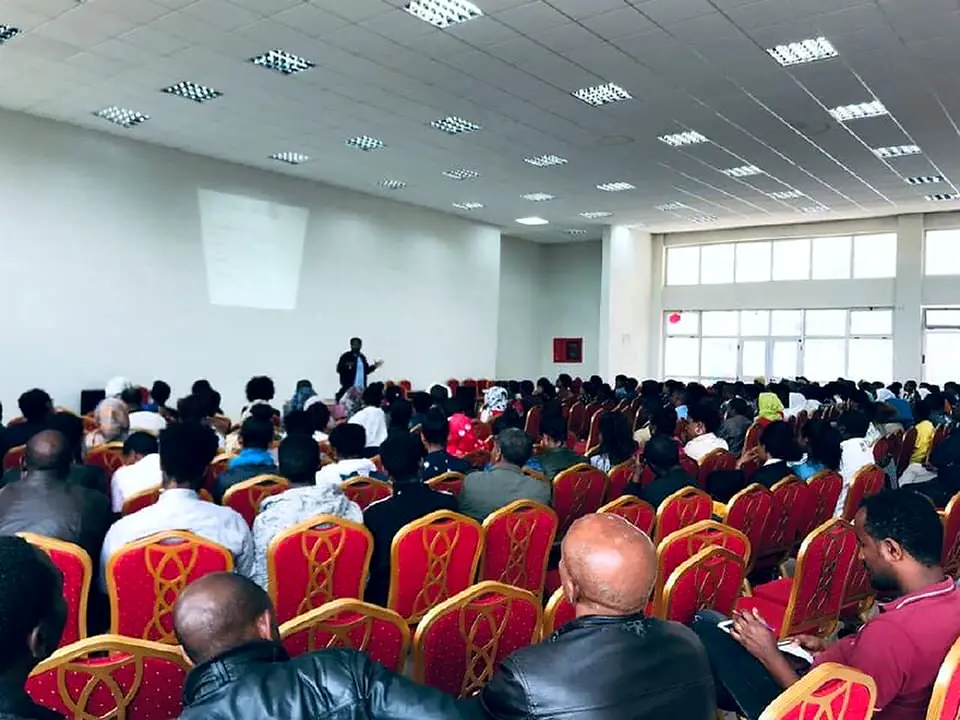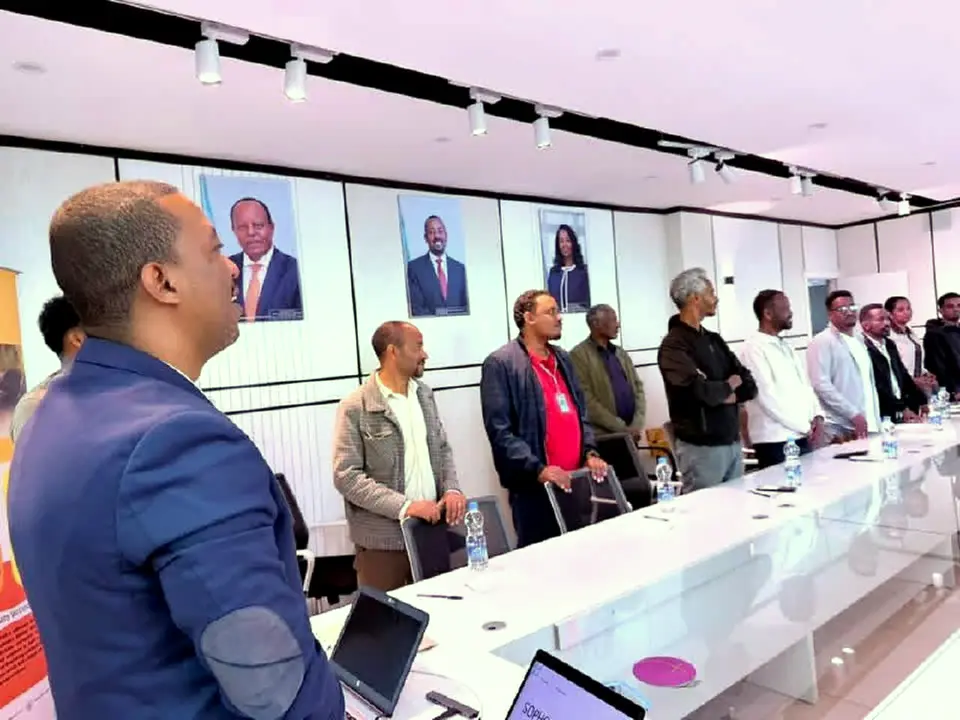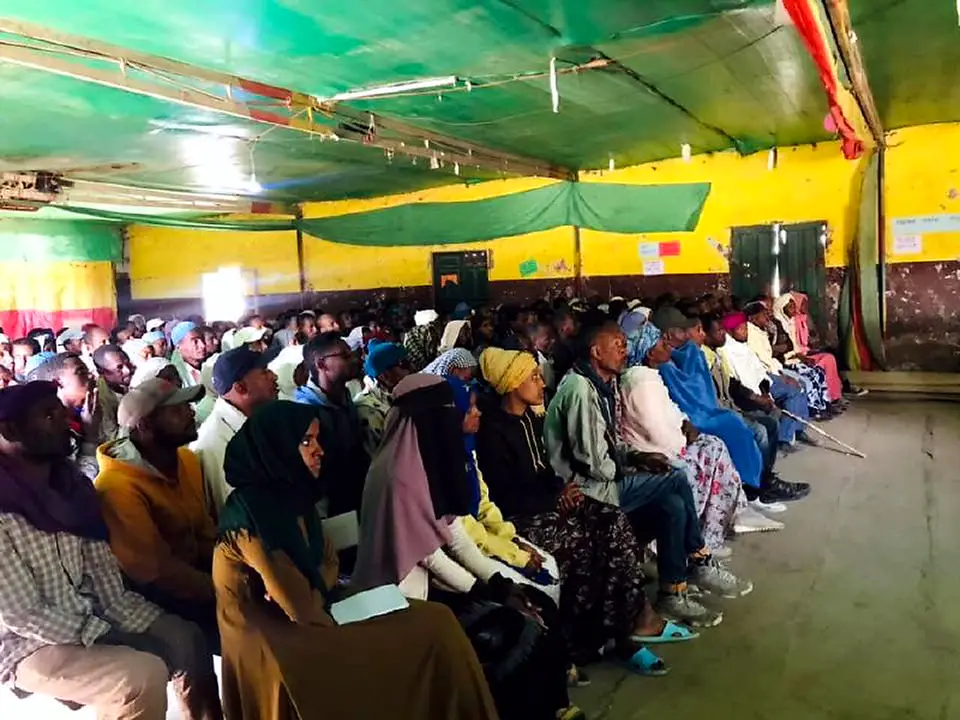
In March 2023, in collaboration with the Ministry of Peace, we went to Debre Berhan in the Amhara region. Around 26,000 people displaced by crisis in the Oromia region were living there in shelters.
Who we trained
We worked with selected community leaders among the displaced: the people others in the shelters turn to. Training them means the help stays in the shelter after we leave.
What we covered
The training had three parts, which we described in Amharic and English:
- Healing inner wounds. How psychological injury shows itself, and how healing begins.
- Social and personal wellbeing. Looking after yourself and the people around you when ordinary life has been taken away.
- Narratives. How to tell the story of what we have lived through in a way that builds trust, and that serves and builds up the next generation instead of passing the wound on.
The third part matters more than it may seem. Displacement leaves people with a story about who did what to whom. Told one way, it hardens into resentment for another generation. Told another way, it can become part of reconciliation.
Part of a larger effort
Later the same year we ran conflict prevention, management and resolution training for government and civil society representatives, built on practical issues and real-life scenarios. Peace and healing work best together: people who carry unhealed wounds find it very hard to build peace, and peace that ignores those wounds rarely lasts.